
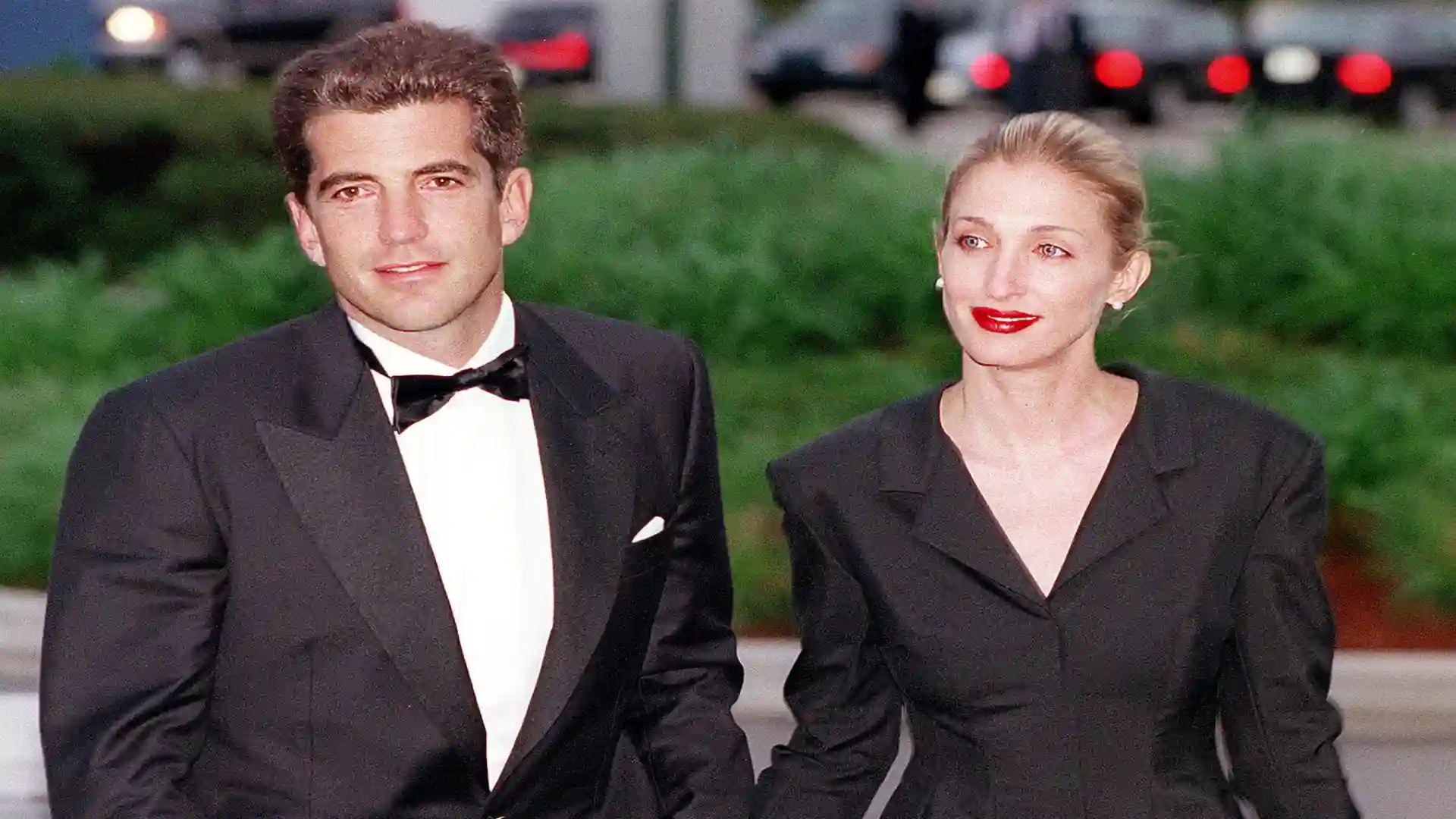
The disappearance of John F. Kennedy Jr. and his wife, Carolyn Bessette-Kennedy, remains one of the most talked-about tragedies in American history. On July 16, 1999, the couple boarded a small plane with Carolyn’s sister, Lauren Bessette. They were travelling from New Jersey to Martha’s Vineyard when the aircraft disappeared over the Atlantic Ocean.
What followed was a large search operation involving the United States Coast Guard, military aircraft, local authorities, and other rescue teams. Behind the headlines, however, were hours of confusion, difficult decisions, and people working through the night to find the missing passengers.
A new book, The Last Flight, takes readers inside the Coast Guard’s search mission and explains how officers responded when they learned that JFK Jr.’s plane was missing.
The story offers a closer look at the people who took part in the search, the challenges they faced, and the efforts made to locate John Kennedy Jr., Carolyn Bessette, and Lauren Bessette.
Who Were JFK Jr. and Carolyn Bessette-Kennedy?
John F. Kennedy Jr. was the son of former US President John F. Kennedy and Jacqueline Kennedy Onassis. Born on November 25, 1960, he grew up in the public eye and became one of America’s best-known public figures.
Many people knew him as JFK Jr. or John Kennedy Jr. His life attracted attention because of his famous family, his career, and his personal relationships.
Carolyn Bessette-Kennedy worked in the fashion industry and became widely known after her relationship with Kennedy became public. The couple married privately in September 1996 and tried to keep much of their personal life away from the media.
Carolyn was known for her simple fashion style and quiet personality. Despite the attention surrounding their marriage, she and JFK Jr. often tried to maintain a private life.
Lauren Bessette, Carolyn’s older sister, was also on the plane during their final journey.
The three were travelling together when the aircraft disappeared, leading to a search that soon attracted worldwide attention.
What Happened on the Night JFK Jr.’s Plane Disappeared?
On the evening of July 16, 1999, JFK Jr. left New Jersey in a Piper Saratoga aircraft. He was flying to Martha’s Vineyard, where he planned to drop off Lauren Bessette before continuing to Hyannis Port, Massachusetts.
Kennedy was piloting the aircraft himself. He had experience flying the route and had made the trip between New Jersey and Martha’s Vineyard many times before.
However, the weather and visibility conditions were challenging that night. Darkness and haze made it difficult to see clear reference points, especially over the water.
When the plane failed to arrive as expected, concerns quickly grew. There was no confirmed information about where the aircraft had gone, and officials could not immediately determine whether it had landed somewhere else or crashed.
The missing plane soon became an urgent rescue case.
Inside the Coast Guard’s Emergency Response
In the early hours of July 17, a Coast Guard officer received an urgent phone call informing him that JFK Jr.’s aircraft was missing. He was asked to report to the Group Woods Hole operations centre as quickly as possible.
The officer, who later shared his experience in The Last Flight, immediately began thinking about what might have happened.
At that stage, there were very few confirmed details. Kennedy might have experienced trouble during the flight, or the aircraft might have landed somewhere without contacting the authorities. The team had to consider different possibilities rather than jump to conclusions.
When the officer arrived at the operations centre, Lieutenant Craig Jaramillo asked what they should do next.
Instead of giving him every instruction, the senior officer asked Jaramillo to suggest a plan. The lieutenant proposed several important steps, including contacting Coast Guard units and warning other maritime authorities.
The team then expanded the response by notifying additional agencies and local partners.
These included the Coast Guard’s subordinate stations, authorities in Boston, the Marine Safety Office in Providence, local police departments, harbour officials, and state maritime law enforcement.
The goal was to gather information quickly, alert nearby units, and prepare for a search across the water and from the air.
How the Search for John Kennedy Jr. Was Organised
Finding a missing aircraft over the ocean is difficult, especially when the search begins in darkness. Rescuers need to cover large areas without wasting time or putting other crews at risk.
The Coast Guard began planning a wider search that would involve several agencies. The Federal Aviation Administration, the US Navy, and the US Air Force were among the organisations preparing to assist.
The search teams had to divide the area into sections and decide which aircraft or boats would cover each part.
Fixed-wing aircraft were assigned search patterns at higher altitudes, while helicopters would operate at lower levels. Boats were also given specific areas to check on the water.
This careful planning helped reduce the risk of different teams searching the same area unnecessarily. It also helped prevent aircraft and vessels from getting too close to one another.
Communication was another major challenge. Several radio channels were active at the same time, with different teams reporting information and receiving instructions.
Every message mattered. Search coordinators needed to know where each team was operating, which areas had already been checked, and whether any possible signs of the missing aircraft had been found.
The operation required patience, teamwork, and constant communication.
Why Was It So Difficult to Find JFK Jr.’s Plane?
One of the biggest problems was the lack of reliable information about the aircraft’s final location.
Officials knew that JFK Jr. had been travelling towards Martha’s Vineyard, but they did not know exactly where the plane had gone off course, if it had done so at all.
The search team contacted nearby airports to check whether the aircraft had landed. When those checks did not provide an answer, officials focused on the expected flight route.
Kennedy had flown the route many times, but previous experience could not remove the risks created by poor visibility and darkness.
Under visual flight rules, pilots generally rely on what they can see outside the aircraft to maintain orientation and navigate. When the horizon and other visual reference points become difficult to see, it can be harder to judge the aircraft’s position and direction.
Over open water at night, the absence of clear visual references can make flying particularly challenging.
Investigators later determined that spatial disorientation played a role in the crash. This is a condition in which a pilot can lose an accurate sense of the aircraft’s position or movement.
During the early search, however, rescuers did not know exactly what had happened. They had to work with the information available and keep searching.
The Kennedy Family Waited for News
As the search continued, members of the Kennedy family waited anxiously for information about John F. Kennedy Jr., Carolyn Bessette-Kennedy, and Lauren Bessette.
The case quickly attracted international media attention. Reporters gathered near the Kennedy family compound in Hyannis Port, Massachusetts, as the public followed developments.
JFK Jr. had spent much of his life under public attention because of his father, President John F. Kennedy, who was assassinated in 1963. His own disappearance brought renewed attention to the Kennedy family and its history of personal tragedy.
For the rescuers, though, the priority remained the search. They needed to examine possible routes, coordinate resources, and find evidence that could explain where the plane had gone.
At that point, there was still hope that the aircraft might be found and the passengers rescued.
What Happened to JFK Jr., Carolyn Bessette, and Lauren Bessette?
The search eventually led to the discovery of the aircraft’s wreckage in the Atlantic Ocean near Martha’s Vineyard.
John F. Kennedy Jr., Carolyn Bessette-Kennedy, and Lauren Bessette all died in the crash. Their deaths were confirmed after the recovery operation.
The National Transportation Safety Board later concluded that the probable cause of the crash was Kennedy’s failure to maintain control of the aircraft during a descent over water at night, which resulted from spatial disorientation.
The tragedy shocked the United States and people around the world. It also raised questions about the dangers of flying at night when visibility is poor, even for pilots who have experience.
The loss of Carolyn and Lauren was also deeply felt by their family and friends. Although much of the public attention focused on JFK Jr. because of his famous surname, all three passengers lost their lives in the same accident.
What Does The Last Flight Reveal About the Search?
The Last Flight offers a closer look at the work carried out by the Coast Guard during the early hours of the emergency.
Rather than focusing only on the famous names involved, the account explores the decisions made by the people responsible for coordinating the response.
It describes the uncertainty that surrounded the missing aircraft, the pressure on officers to act quickly, and the effort needed to bring different agencies together.
The account also shows how leadership works during an emergency. Junior officers must be able to think clearly, suggest practical steps, and respond to changing information. Senior officers must make decisions while helping their teams remain focused.
These details help readers understand the difficult work involved in a major search operation.
The story is also a reminder that rescue missions depend on many people who rarely receive public attention. Behind every major operation are officers, pilots, radio operators, and other workers trying to find answers under difficult conditions.
Read More Also – Altina Schinasi: The Artist Behind Cat-Eye Glasses

1 comment
[…] Read More Also – JFK Jr. and Carolyn Bessette: The Untold Story of the Search […]