
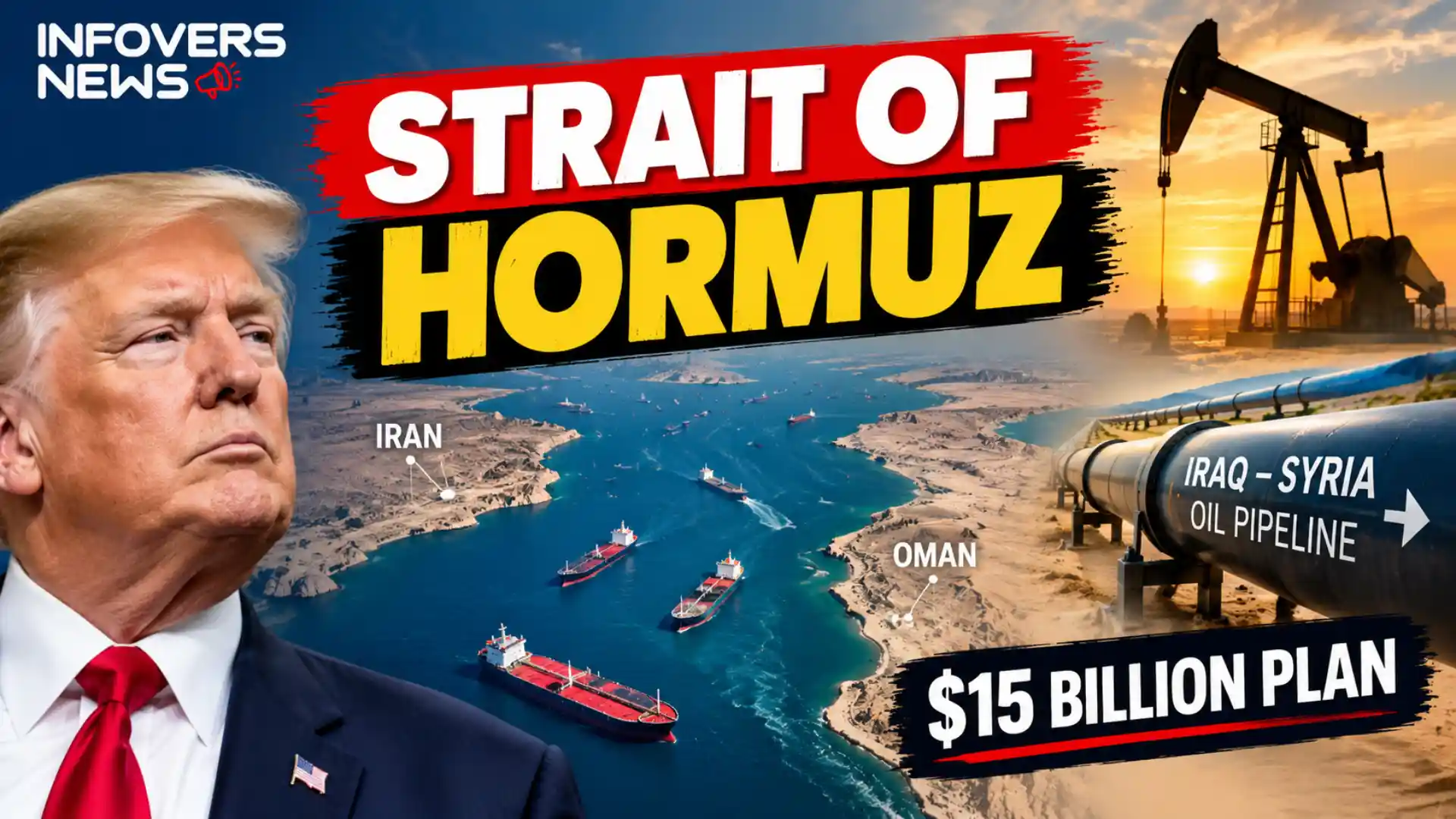
The Strait of Hormuz has become a major focus of attention as countries look for ways to keep oil supplies moving during regional conflicts. A proposed oil pipeline linking Iraq to Syria has gained fresh interest because it could offer an alternative route for transporting crude oil without sending it through this important shipping passage.
However, the project has also raised questions about the business connections of a senior US diplomat. A Reuters investigation published on October 9 reported that Thomas Barrack, the US special presidential envoy for Iraq and Syria and the US ambassador to Turkey, had encouraged the involvement of an investment firm linked to his business partner in the proposed pipeline project.
The pipeline plan could cost around $15 billion and take at least four years to complete, according to people familiar with the project who spoke to Reuters in August. While the plan could offer Iraq another way to export oil, Barrack’s relationship with the investment firm has drawn attention from government ethics experts.
Barrack’s office and Chevron declined to comment on the report. A US State Department spokesperson said Barrack had no role, affiliation or financial interest in the Kirkuk-Baniyas pipeline project. The department also said his public comments reflected the long-standing US policy interest in connecting energy supplies across the region.
Why the Strait of Hormuz Matters
The Strait of Hormuz is one of the world’s most important routes for transporting oil and other energy products. It lies between Iran and Oman and connects the Persian Gulf with the Gulf of Oman and the Arabian Sea.
A large amount of the world’s oil supply passes through this narrow waterway. Major oil-producing countries in the Gulf depend on it to send crude oil to international buyers, including markets in Asia.
Because so much oil moves through the strait, any military conflict, shipping restriction or security threat in the area can affect global energy markets. Even the risk of disruption can push oil prices higher as traders worry about supplies reaching refineries and customers.
This is why governments and energy companies have been looking at alternative export routes. A pipeline that carries oil across land can reduce dependence on tankers passing through a single maritime chokepoint.
The proposed Kirkuk-Baniyas pipeline is one such option. If it is restored and becomes operational, it could allow Iraqi crude oil to travel west towards Syria’s Mediterranean coast, creating a different route to international markets.
However, the project remains a long-term proposal. It would require major investment, technical work and cooperation between the countries and companies involved.
What Is the $15 Billion Kirkuk-Baniyas Pipeline Plan?
The Kirkuk-Baniyas pipeline is an old oil route that once carried Iraqi crude from the Kirkuk oil region towards the Baniyas terminal on Syria’s Mediterranean coast.
For decades, the pipeline offered Iraq a way to move oil towards the Mediterranean rather than relying entirely on routes connected to the Persian Gulf. However, operations faced repeated interruptions from the early 1980s, and the line has remained out of action since the US-led invasion of Iraq in 2003.
Now, plans to bring the pipeline back into service have received renewed attention because of regional tensions and concerns about oil shipments through the Strait of Hormuz.
In July 2026, Iraq and Syria signed memorandums of understanding with a consortium involving TI Capital, US energy company Chevron and Qatar-based UCC Holding. The agreements cover technical and financial studies linked to the rehabilitation of the pipeline.
These studies are an important early step. Before construction or restoration can move forward, the companies and governments need to assess the condition of the existing infrastructure, the cost of the work and the commercial value of transporting oil through the route.
Reuters reported in August that people familiar with the plans expected the project to cost about $15 billion and take at least four years to complete.
That means the pipeline cannot provide an immediate replacement for the Strait of Hormuz. Even if the project moves ahead, several years of planning, financing and construction could be needed before it can carry oil again.
Read More Also – Ann Widdecombe Murder Suspect Joshua Kerry Faces Terrorism Charge
Thomas Barrack’s Role in the Pipeline Discussions
Thomas Barrack is a senior US diplomat who has served as special presidential envoy for Iraq and Syria and as ambassador to Turkey.
According to three people cited by Reuters, Barrack advocated for TI Capital to be involved in the proposed pipeline development. Two of those people said he raised the firm’s participation during discussions with Iraqi and Syrian officials after the Iran conflict began.
The report also described a public statement issued by Barrack and Iraqi Prime Minister Ali al-Zaidi on June 16, 2026. The statement welcomed Iraq’s decision to move forward with a memorandum of understanding involving TI Capital for the rehabilitation of the Kirkuk-Baniyas pipeline.
The statement did not mention Chevron or UCC Holding in connection with the pipeline, although both companies were later included in the consortium announced in July.
Reuters also reported that Barrack raised the idea of involving TI Capital at the Milken Institute Global Conference in Los Angeles in May. A person familiar with the conversation said the discussion took place on the sidelines of the event.
Barrack and TI Capital founder Ziad Ghandour also took part in a private panel at the conference. According to the Reuters report, the discussion included broader questions about new energy supply routes in the Middle East.
The report does not establish that Barrack personally stands to earn money from the pipeline. Instead, the main concern is whether his business relationship with Ghandour could affect the appearance of impartiality in his official work.
What Is TI Capital and Who Is Ziad Ghandour?
TI Capital is a California-based investment group whose founder and chief executive is Ziad Ghandour. The firm became part of the pipeline discussion through the consortium formed to study the restoration of the Kirkuk-Baniyas route.
The company’s relationship with Barrack goes beyond the proposed energy project. Public records cited by Reuters show that Barrack had a financial interest in a real-estate venture managed by TI Capital.
The venture, known as ACD-TI Oakley Investment LLC, is connected to a large housing development near San Francisco, California.
Barrack disclosed an equity interest in the company in a financial filing submitted to the US Office of Government Ethics in March 2025, before he took up his diplomatic roles. The filing did not state the exact size of his ownership stake, but it said he could receive 20% of the company’s profits once earnings reached an established minimum.
The filing also listed a paid consulting role with the venture in 2024. It did not specify how much Barrack received for that work.
According to California corporate records cited by Reuters, TI Capital manages the real-estate venture and Ghandour serves as its chief executive.
These financial links are important because government ethics rules can require officials to avoid decisions or activities that could raise questions about their independence, even when there is no evidence that they will personally benefit from a particular decision.
Do the Business Connections Create a Conflict of Interest?
The main issue raised by the Reuters investigation is whether Barrack’s advocacy for TI Capital could conflict with the standards expected of a senior government official.
Barrack had previously signed an ethics agreement stating that he would recuse himself from matters directly affecting the financial interests of the ACD-TI Oakley real-estate venture unless he first obtained a waiver.
However, Reuters reported that Barrack had not filed a conflict-of-interest waiver with the US Office of Government Ethics concerning his ties to the company as it participated in the pipeline project.
A waiver can allow a government official to take part in a matter that would otherwise require them to step aside. Without such permission, officials may need to avoid activities covered by the relevant ethics restrictions.
Ethics experts who spoke to Reuters said the question is not limited to whether an official owns a direct financial stake in the project.
Richard Painter, a former chief White House ethics lawyer and a professor at the University of Minnesota Law School, said the impartiality rule can apply when an official’s personal or business relationships raise concerns about fair decision-making.
Ann Skeet, interim executive director at Santa Clara University’s Markkula Center for Applied Ethics, also pointed to the appearance of a conflict of interest as a central concern.
Don Fox, a former general counsel and acting director of the US Office of Government Ethics, said promoting a business connected to an official could also raise questions under rules that restrict the use of public office to endorse private enterprises or benefit associated individuals.
These are expert assessments of the reported circumstances, not a court ruling that Barrack violated the law. Reuters reported no evidence that he stood to profit from the pipeline itself.
Two ethics lawyers told Reuters that his relationship with Ghandour would not, by itself, amount to a criminal conflict of interest unless Barrack stood to benefit directly from the pipeline.
The distinction matters. A potential ethics concern does not automatically mean a criminal offence has occurred.
What Has the US State Department Said?
The US State Department defended Barrack’s position in response to questions from Reuters.
A department spokesperson said Barrack had no affiliation with, role in or financial interest in the Kirkuk-Baniyas pipeline project. The spokesperson acknowledged his relationship with the TI Capital real-estate venture but said Barrack had been certified as complying with ethics rules.
The department also said his public comments about the pipeline reflected a long-standing US policy interest in regional energy integration.
Barrack has previously described greater US business involvement in Iraq and Syria as a way to create more clarity and opportunity in the region. In a July 17 post on X, he referred to US companies’ involvement in the two countries as part of a new approach.
Barrack’s office and Chevron declined to comment on the Reuters report. TI Capital, Ghandour and UCC Holding did not respond to requests for comment.
The White House referred Reuters’ questions to the State Department.
The available information therefore leaves an important distinction between the policy goal of improving regional energy connections and the separate questions about whether a particular company should have received support from a diplomat with business ties to its leadership.
How Could the Pipeline Help Iraq Bypass Hormuz?
Iraq is a major oil producer, and exports are an important source of income for the country. When shipping through the Strait of Hormuz faces restrictions or security threats, Iraq can be exposed to supply disruptions and higher transportation costs.
A working Kirkuk-Baniyas pipeline could provide another route for Iraqi crude to reach overseas markets.
Instead of moving all the oil through the Gulf and the Strait of Hormuz, some supplies could travel by pipeline towards Syria and the Mediterranean. From there, oil could be loaded onto tankers for delivery to international buyers.
This could give Iraq greater flexibility when planning exports. An additional route might also help reduce its dependence on one critical shipping passage.
However, the benefits would depend on the pipeline’s capacity, operating costs, security and access to export facilities. The condition of the existing infrastructure would also affect how much of the old route could be reused.
The pipeline would not remove all of Iraq’s exposure to regional risks. A route through Iraq and Syria would still depend on stable conditions, secure infrastructure and reliable cooperation between the countries involved.
It would also need to compete commercially with other export options. A $15 billion investment would require a strong long-term case for the amount of oil that could be transported and the revenue the route could generate.
Other Energy Projects Add to the Regional Picture
The pipeline discussions are part of wider efforts to develop energy links between Iraq, Syria and international investors.
In July, the Iraqi cabinet also named TI Capital as part of a separate consortium with UCC Holding and ConocoPhillips to assess the Akkas gas field, one of Iraq’s largest undeveloped gas reserves.
Reuters also noted that TI Capital claimed on its website to be involved in projects at Syria’s Tartous port. The news agency said it could not independently verify the firm’s role there, and Syria’s port authority did not respond to its questions.
These separate projects show the broader commercial opportunities being discussed in the region. They also help explain why the participation of international companies has become part of conversations about rebuilding infrastructure and expanding energy supplies.
Still, each project requires its own assessment. The inclusion of a company in an agreement to conduct studies does not mean that a final investment decision has been made or that construction is guaranteed.
What Happens Next?
The future of the Kirkuk-Baniyas pipeline will depend on the outcome of technical and financial studies, the availability of investment and agreements between Iraq, Syria and the companies involved.
If the project proceeds, it could eventually provide Iraq with another path to Mediterranean export markets. But the reported timeline of at least four years means it would be a long-term option rather than a quick solution to disruptions around the Strait of Hormuz.
The ethics questions surrounding Barrack may also remain under scrutiny. The key issues include the nature of his relationship with TI Capital’s leadership, the scope of his official involvement and whether the applicable government rules required him to step aside from discussions involving the firm.
For now, the pipeline remains a proposed project with significant costs and practical challenges. Its potential importance lies in offering a new route for oil, while the controversy surrounding its development highlights the need for transparency when public officials deal with companies connected to their private business relationships.
Final Thoughts
The Strait of Hormuz remains a vital route for global energy supplies, and concerns about disruptions have encouraged countries to consider other ways of moving oil.
The proposed $15 billion Kirkuk-Baniyas pipeline could help Iraq send crude oil towards the Mediterranean without relying entirely on the Strait of Hormuz. Yet the project is still at an early stage and may take years to complete.
At the same time, the reported involvement of TI Capital has raised questions about business relationships and government ethics. The Reuters investigation found no evidence that Thomas Barrack stood to profit from the pipeline, while the State Department said he had no financial interest or role in the project.
The next steps will depend on whether the pipeline can move from studies to construction, and whether the questions surrounding the process are addressed clearly.
Read More Also – HappyMod: What It Is, How It Works, Features, Safety and Legal Risks
