
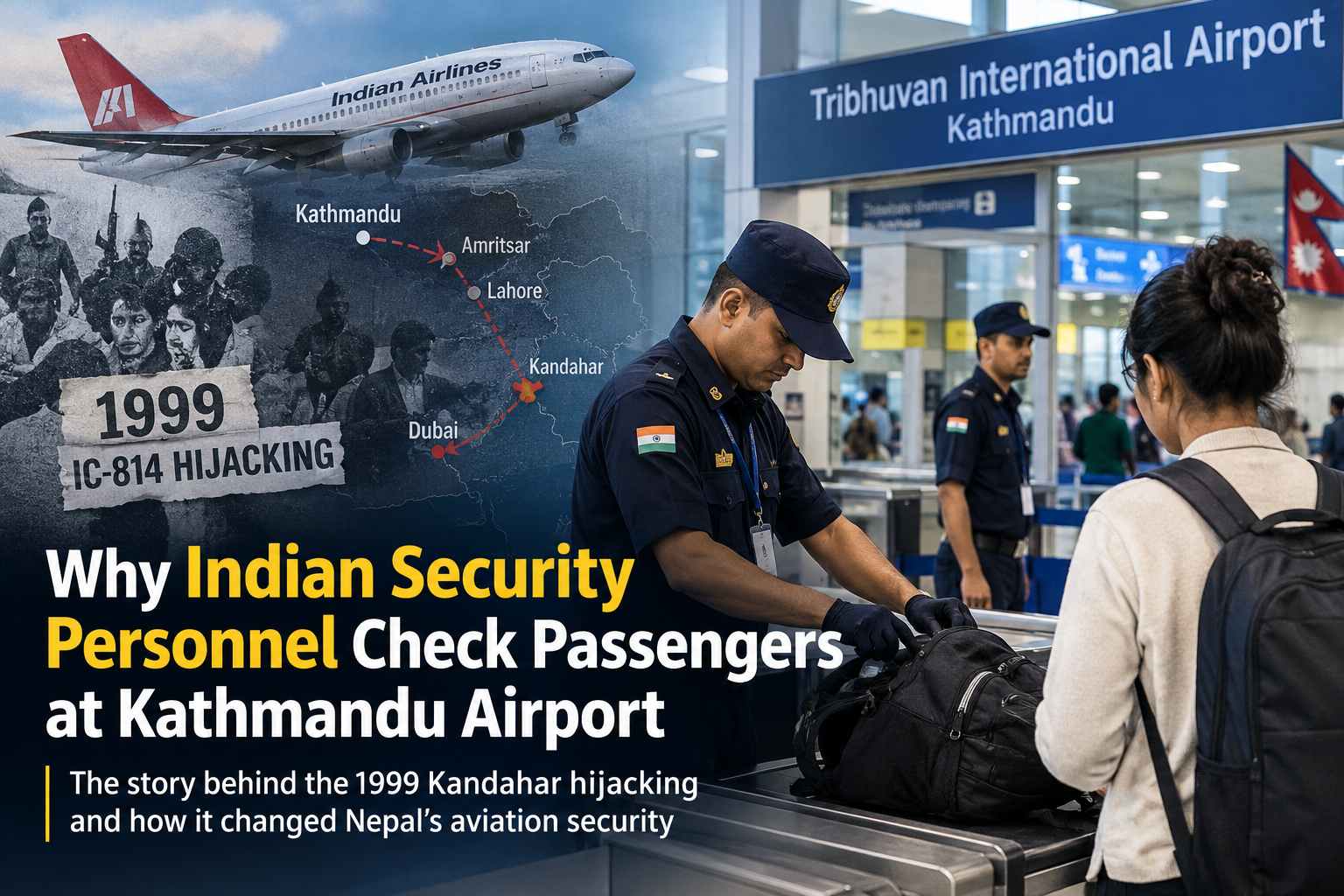
For more than two decades, passengers flying from Kathmandu to India on certain Indian airlines have faced an additional security check before boarding. The unusual arrangement dates back to the 1999 hijacking of Indian Airlines Flight IC-814, an incident that raised serious concerns about airport security and changed aviation procedures between India and Nepal.
Even today, the extra screening remains in place at Tribhuvan International Airport in Kathmandu, highlighting how a major security crisis can influence aviation practices long after the incident itself.
How the IC-814 Hijacking Changed Airport Security
On December 24, 1999, Indian Airlines Flight IC-814 departed from Kathmandu for New Delhi with approximately 190 people on board, according to the report. Five armed hijackers seized control of the aircraft during the journey.
The plane was taken through several locations, including Amritsar, Lahore and Dubai, before eventually landing in Kandahar, Afghanistan. The crisis lasted until December 31, leaving passengers and crew members trapped for days.
The hijacking ended after the Indian government agreed to release three jailed militants in exchange for the hostages. One of those released was Masood Azhar, who later founded the terrorist organisation Jaish-e-Mohammed.
The incident exposed serious concerns about aviation security and prompted Indian authorities to reassess the risks associated with flights departing from Kathmandu.
Why Indian Security Staff Are Present at Kathmandu Airport
Following the hijacking, India suspended Indian Airlines flights between Kathmandu and India for around five months. Services resumed on June 1, 2000, after discussions between the two countries and the introduction of additional security measures.
Under the arrangement, passengers travelling to India on Indian Airlines flights had to undergo a second security check after completing Nepal’s regular airport screening.
The practice continues today for passengers flying on Air India and IndiGo from Kathmandu. Indian security personnel carry out additional checks of passengers and their hand baggage before they board their flights.
This process operates alongside Nepal’s existing airport security system and is intended to provide an additional layer of protection against potential threats.
Additional Screening Continues Despite Security Improvements
Kathmandu’s Tribhuvan International Airport has undergone substantial changes since 2000. According to the report, the airport now has more than 500 police personnel, along with X-ray machines, metal detectors and an extensive CCTV network.
These improvements reflect Nepal’s efforts to strengthen airport security and modernise its screening infrastructure.
However, the additional checks for passengers travelling on Indian airlines have continued despite these developments. Passengers using other international airlines generally follow Nepal’s standard airport screening procedures rather than the separate Indian security check.
The arrangement therefore remains a distinctive feature of India-bound flights operated by Indian carriers from Kathmandu.
Questions About the Arrangement Remain
The long-standing security practice has also raised questions about its legal and diplomatic basis. A report published by Nepal’s Kantipur newspaper in September 2026 said officials from several Nepali government agencies had been unable to locate clear documentation authorising the arrangement.
The report also highlighted concerns about coordination between the different agencies responsible for airport security. A high-level review led by former Supreme Court Justice Anil Kumar Sinha reportedly identified weaknesses in coordination, overlapping responsibilities and gaps in accountability.
These concerns have renewed attention on how airport security is managed and whether the existing system needs further review.
A Security Measure Shaped by History
The additional screening at Kathmandu airport is a reminder of the lasting impact of the IC-814 hijacking. What began as a response to a major aviation security crisis has remained part of the boarding process for Indian airline passengers travelling from Nepal to India.
Although airport infrastructure and security technology have improved over the years, the special checks continue. Their future will depend on how India and Nepal address aviation security, administrative responsibilities and the long-standing arrangements between the two neighbours.
Read Also: Katie Zacharia Faces Questions After Brief First White House Press Briefing
