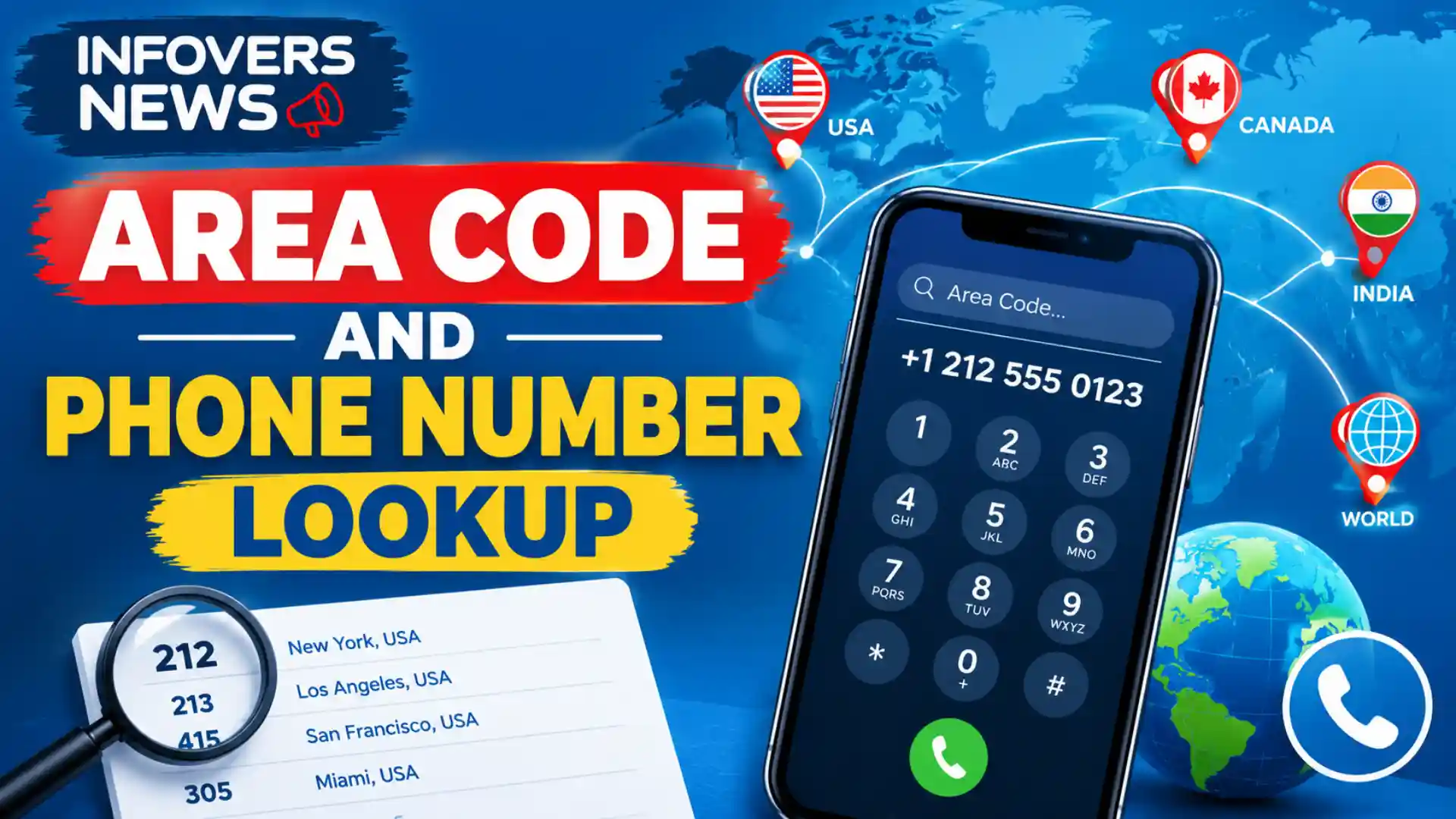
Area codes help identify the geographic region or telephone service connected with a phone number. They are useful when calling someone in another city, checking an unfamiliar number or making an international call.
The keyword area code and is often used by people searching for an area code and its location, an area code and country, or an area code and phone number lookup. The exact meaning depends on the number being searched.
This guide explains how area codes work and provides tables of common US and Canadian area codes, international country calling codes and useful resources for finding more numbers.
What Is an Area Code?
An area code is a group of digits used as part of a telephone numbering system. In the United States and Canada, area codes usually contain three digits and form part of a 10-digit phone number.
For example, a North American phone number may look like this:
(212) 555-0123
- 212: Area code
- 555: Central office or exchange code
- 0123: Subscriber number
The area code can indicate a city or region, although some areas have several codes and some codes cover multiple locations.
International phone numbers work differently. A country calling code, such as +1 for the United States and Canada or +91 for India, identifies the country or numbering area before the local telephone number.
US Area Codes and Locations
The United States uses three-digit area codes under the North American Numbering Plan. Large cities and regions may have more than one area code because telephone number demand has increased over time.
The following table lists well-known US area codes and their commonly associated locations.
| Area Code | City or Region | State |
|---|---|---|
| 212 | Manhattan, New York City | New York |
| 213 | Central Los Angeles | California |
| 310 | West Los Angeles and nearby areas | California |
| 312 | Chicago | Illinois |
| 305 | Miami and nearby areas | Florida |
| 404 | Atlanta | Georgia |
| 415 | San Francisco | California |
| 202 | Washington, D.C. | District of Columbia |
| 214 | Dallas | Texas |
| 713 | Houston | Texas |
| 512 | Austin | Texas |
| 702 | Las Vegas | Nevada |
| 206 | Seattle | Washington |
| 617 | Boston and nearby areas | Massachusetts |
| 215 | Philadelphia | Pennsylvania |
| 303 | Denver and nearby areas | Colorado |
| 602 | Phoenix | Arizona |
| 901 | Memphis | Tennessee |
| 504 | New Orleans | Louisiana |
| 801 | Salt Lake City and nearby areas | Utah |
These are examples, not a complete list. Boundaries, overlays and number assignments can change, so use the official North American Numbering Plan Administrator directory to verify a specific area code.
Canadian Area Codes and Locations
Canada also follows the North American Numbering Plan. Its telephone numbers use the country calling code +1, followed by a three-digit area code and a seven-digit local number.
| Area Code | City or Region | Province or Territory |
|---|---|---|
| 416 | Toronto | Ontario |
| 647 | Toronto | Ontario |
| 437 | Toronto | Ontario |
| 604 | Vancouver and nearby areas | British Columbia |
| 778 | British Columbia, including Vancouver | British Columbia |
| 236 | British Columbia | British Columbia |
| 514 | Montreal | Quebec |
| 438 | Montreal | Quebec |
| 418 | Quebec City and eastern Quebec | Quebec |
| 613 | Ottawa and eastern Ontario | Ontario |
| 343 | Ottawa and eastern Ontario | Ontario |
| 403 | Calgary and southern Alberta | Alberta |
| 587 | Alberta | Alberta |
| 780 | Edmonton and northern Alberta | Alberta |
| 204 | Manitoba | Manitoba |
| 306 | Saskatchewan | Saskatchewan |
| 902 | Nova Scotia and Prince Edward Island | Atlantic Canada |
| 709 | Newfoundland and Labrador | Newfoundland and Labrador |
| 867 | Yukon, Northwest Territories and Nunavut | Northern Canada |
Canadian area codes may overlap in the same region. For example, Toronto has several codes because new area codes have been introduced to provide additional telephone numbers.
International Country Calling Codes
When calling a phone number in another country, you usually need its international country calling code. The plus sign (+) represents the international access prefix used by your phone or dialing system.
The following table lists country calling codes for frequently contacted countries.
| Country | Calling Code |
|---|---|
| United States | +1 |
| Canada | +1 |
| United Kingdom | +44 |
| India | +91 |
| Pakistan | +92 |
| Afghanistan | +93 |
| Bangladesh | +880 |
| Australia | +61 |
| New Zealand | +64 |
| China | +86 |
| Japan | +81 |
| South Korea | +82 |
| Singapore | +65 |
| Malaysia | +60 |
| Indonesia | +62 |
| Philippines | +63 |
| Thailand | +66 |
| Saudi Arabia | +966 |
| United Arab Emirates | +971 |
| Qatar | +974 |
| Kuwait | +965 |
| Oman | +968 |
| Turkey | +90 |
| France | +33 |
| Germany | +49 |
| Italy | +39 |
| Spain | +34 |
| Portugal | +351 |
| Netherlands | +31 |
| Switzerland | +41 |
| Sweden | +46 |
| Norway | +47 |
| Denmark | +45 |
| Ireland | +353 |
| South Africa | +27 |
| Nigeria | +234 |
| Kenya | +254 |
| Egypt | +20 |
| Brazil | +55 |
| Argentina | +54 |
| Chile | +56 |
| Colombia | +57 |
| Mexico | +52 |
| Jamaica | +1 |
| Bahamas | +1 |
| Barbados | +1 |
| Russia | +7 |
| Ukraine | +380 |
| Nepal | +977 |
| Sri Lanka | +94 |
| Maldives | +960 |
| Bhutan | +975 |
Important: Some countries and territories share a calling code. For example, the United States, Canada and several Caribbean destinations use +1. You may need the correct three-digit area code or territory code to complete the call.
For the official international numbering reference, see the International Telecommunication Union’s country calling code register.
Area Code vs Country Calling Code
Area codes and country calling codes serve different purposes.
| Feature | Area Code | Country Calling Code |
|---|---|---|
| Main purpose | Identifies a region or numbering area | Identifies a country or international numbering area |
| Example | 212 for Manhattan | +91 for India |
| Number of digits | Often three in the US and Canada | Usually one to three digits |
| When used | Domestic or North American calls | International calls and country identification |
| Example number | (212) 555-0123 | +91 followed by an Indian phone number |
A country calling code should not be confused with a local area code. The number format depends on the country being called.
How to Find an Area Code and Its Location
If you know a phone number but do not know its area code, follow these steps:
- Check the first digits: Identify the country calling code and area code, if present.
- Separate the number: For US and Canadian numbers, the standard format is a three-digit area code followed by a seven-digit local number.
- Search the official directory: Use the NANPA area code lookup for North American numbers.
- Check international codes: Use the ITU numbering resources to identify country calling codes.
- Confirm the result: Number portability means the area code may not show the caller’s current location or service provider.
You can also search for a city name alongside the words “area code” to find the codes commonly used in that location.
What Are Overlay and Split Area Codes?
Telephone numbering systems sometimes need changes when an area runs low on available phone numbers. Two common solutions are overlays and splits.
Overlay Area Codes
An overlay introduces an additional area code in a region already served by an existing code. Both codes cover the same geographic area, so new phone numbers may receive either code.
For example, Toronto uses multiple area codes, including 416, 647 and 437.
Split Area Codes
A split divides an existing numbering region into separate geographic areas. One area may keep the original code while another receives a new one.
An area code split can require residents and businesses to update their saved contacts, signs and telephone information.
Unassigned Area Codes
An unassigned area code is a code that has not been placed into service for normal use in the numbering plan. Some codes may be reserved for future needs or other specific purposes.
The status of a code can change, so a current official numbering report is the best source for confirmation.
Official Resources for a Complete Area Code List
For readers who need a full directory rather than a selection of popular codes, these resources are useful:
- North American area codes: NANPA official reports include geographic codes, non-geographic codes, planned codes and numbering-plan information.
- Search a North American area code: NANPA website provides area code lookup and related telephone numbering resources.
- International calling codes: ITU country code register provides international numbering information.
- International dialing formats: ITU dialing procedures lists country-specific dialing prefixes and number-length information.
These resources are helpful because area code lists can change when new codes are introduced or numbering assignments are updated.
Conclusion
Area codes help people identify telephone numbering regions and connect calls to the correct destinations. If you are searching for an area code and location, start by checking whether the number is from the United States, Canada or another country.
US and Canadian numbers generally use three-digit area codes, while international calls require the correct country calling code. Tables can help you find common codes quickly, but official directories should be used to confirm current assignments and planned changes.
Whether you need a US area code, a Canadian city code or an international dialing prefix, understanding the difference between these number types makes telephone lookups easier.
Read More Also – When Is Amazon Prime Day 2026?
