
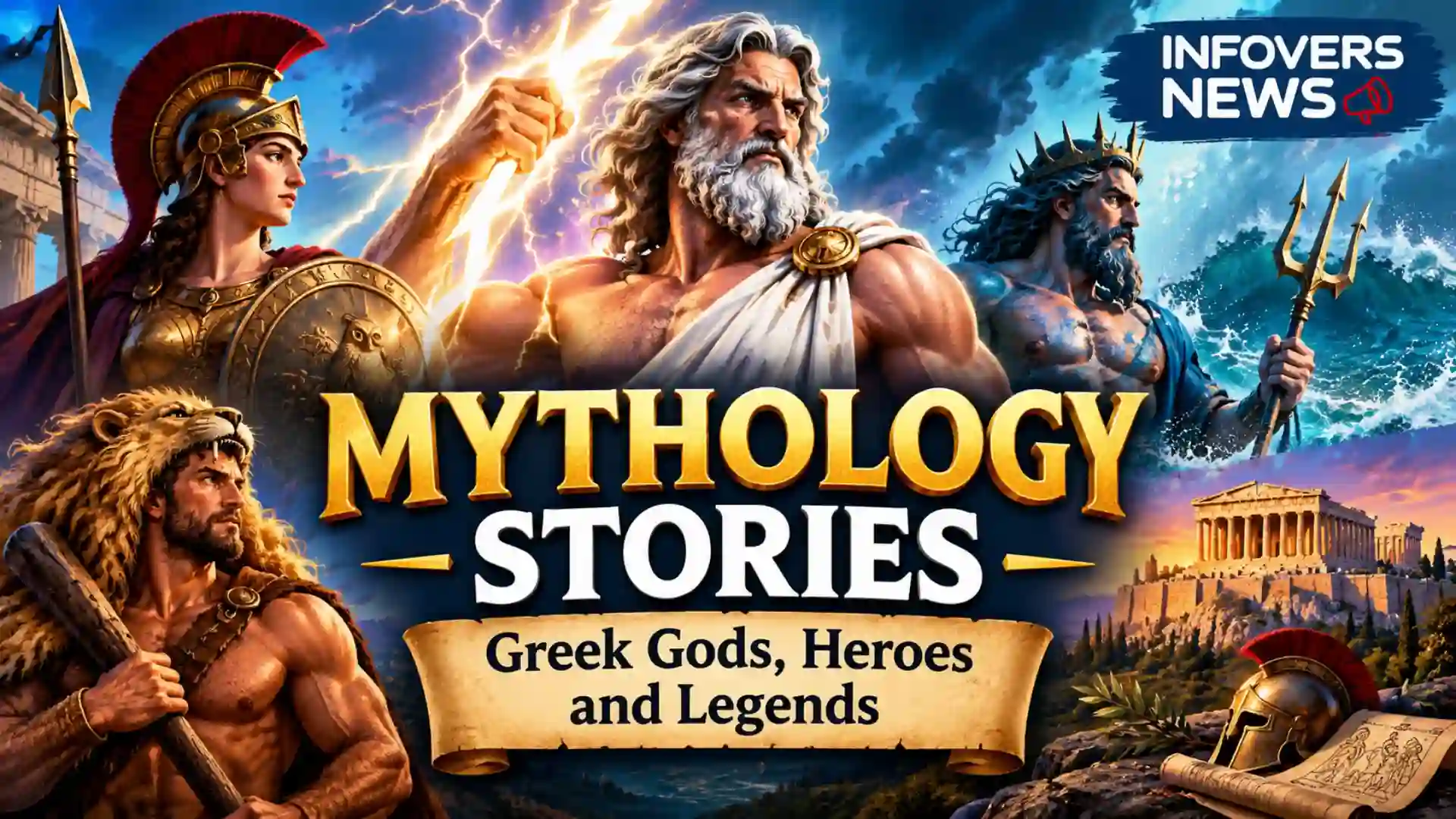
Mythology stories have been shared for thousands of years. They tell us about powerful gods, brave heroes, strange creatures and amazing adventures. These stories helped ancient people understand the world around them and explain things they could not easily understand, such as storms, seasons, life and death.
Greek mythology is one of the best-known mythological traditions in the world. It includes famous characters like Zeus, Athena, Poseidon and Hercules, along with legendary events such as the Trojan War and the adventures of Odysseus. Even today, these ancient tales inspire movies, books, video games and popular culture.
In this article, we will explore Greek mythology, its famous gods, popular stories and the lessons these ancient tales continue to share.
What Is Greek Mythology?
Greek mythology is a collection of traditional stories about the gods, goddesses, heroes and mythical creatures of ancient Greece. These tales were an important part of Greek culture, religion and everyday life.
People used mythology to explain natural events, understand human behaviour and pass on ideas about courage, justice, loyalty and pride. Many stories also explored the struggle between good and evil, the dangers of greed and the consequences of challenging the gods.
Greek mythology was passed down through generations by oral storytelling, poetry, art and religious traditions. Later, writers recorded many of these stories in famous works that helped preserve them for future generations.
The 12 Olympian Gods in Greek Mythology
According to Greek tradition, many of the most important gods lived on Mount Olympus. They had different powers and were believed to influence various parts of human life and nature.
Here are the major Greek gods and goddesses commonly known as the Olympians.
| God or Goddess | Role in Greek Mythology |
|---|---|
| Zeus | King of the gods and god of the sky and thunder |
| Hera | Goddess of marriage and queen of the gods |
| Athena | Goddess of wisdom and strategic warfare |
| Aphrodite | Goddess of love and beauty |
| Poseidon | God of the sea, earthquakes and horses |
| Hermes | Messenger of the gods and protector of travellers |
| Hades | God of the underworld and the dead |
| Dionysus | God of wine, celebration and theatre |
| Demeter | Goddess of agriculture and harvest |
| Apollo | God associated with music, prophecy and healing |
| Ares | God of war and violent conflict |
| Artemis | Goddess of the hunt and wild animals |
The traditional list of the 12 Olympians can vary slightly between ancient sources. Hades, for example, was a major Greek god but usually lived in the underworld rather than on Mount Olympus.
Famous Mythology Stories You Should Know
Greek mythology contains hundreds of stories. Some focus on the power of the gods, while others follow heroes who face dangerous challenges.
1. Zeus and the Rise of the Olympian Gods
Zeus became the ruler of the gods after a major conflict with the Titans. His father, Cronus, feared that one of his children would overthrow him, so he swallowed his children after their birth.
Zeus escaped this fate with help from his mother, Rhea. When he grew older, he challenged Cronus and led a struggle against the Titans. After their victory, Zeus and his brothers divided the realms of the world.
Zeus ruled the sky, Poseidon received the sea, and Hades became the ruler of the underworld. This story explains how the Olympian gods gained power in Greek mythology.
2. Pandora and Her Box
The story of Pandora is one of the most famous Greek mythology stories. According to the traditional tale, Pandora was created by the gods and given a container that she was told not to open.
Curiosity eventually led her to open it, releasing troubles and suffering into the world. Hope remained inside, depending on the version of the story.
Although the tale is commonly known as Pandora’s Box, older accounts describe a jar. The story is often used to explore curiosity, consequences and the difficult realities of human life.
3. Persephone and the Changing Seasons
The story of Persephone and her mother, Demeter, is closely connected with the changing seasons.
Persephone was taken to the underworld by Hades. Her mother, Demeter, the goddess of agriculture, became deeply upset and neglected the earth. Crops stopped growing, and the land became barren.
An agreement was eventually reached that allowed Persephone to spend part of the year with her mother and part of the year in the underworld. Her return brought growth and renewal, while her absence was associated with the colder, less productive months.
This myth offered the ancient Greeks a way to understand the cycle of nature and the changing seasons.
4. Hercules and His Twelve Labours
Hercules, also known as Heracles in Greek, was a famous hero known for his extraordinary strength. He was given a series of difficult tasks known as the Twelve Labours.
These challenges included defeating the Nemean Lion, capturing the Golden Hind, cleaning the Augean stables and bringing Cerberus, the guardian of the underworld, to the surface.
Each task tested his strength, courage and intelligence. The story of Hercules remains popular because it shows how determination and patience can help someone overcome seemingly impossible challenges.
5. Theseus and the Minotaur
Theseus was a Greek hero who travelled to Crete to face the Minotaur, a frightening creature with the body of a man and the head of a bull.
The creature lived inside a complicated maze called the Labyrinth. With help from Ariadne, who gave him a thread to find his way back, Theseus entered the maze and defeated the Minotaur.
He then used the thread to escape. This story is remembered for its themes of bravery, clever thinking and the importance of receiving help when facing a difficult problem.
6. Orpheus and Eurydice
Orpheus was a legendary musician whose music could move people, animals and even the natural world. When his wife, Eurydice, died, he travelled to the underworld in an attempt to bring her back.
His music touched Hades and Persephone, who agreed to let Eurydice return with him under one condition: he must not look back at her until they had both reached the world above.
Near the end of their journey, Orpheus turned around before they were safely out. Eurydice was lost to him again.
This tragic story explores love, trust, grief and the difficulty of controlling fear during uncertain moments.
Where Do Greek Mythology Stories Come From?
Many ancient Greek myths were passed down orally before they were written down. Poets, historians, playwrights and artists helped preserve and develop these traditions.
Some important sources include:
- The Iliad and The Odyssey: Epic poems traditionally attributed to Homer. They explore the Trojan War, its heroes and the long journey of Odysseus.
- Theogony: A poem by Hesiod describing the origins of the gods and the development of divine power.
- Works and Days: Another work by Hesiod that discusses farming, justice, work and moral behaviour while including mythological traditions.
- Greek tragedies: Plays by writers such as Sophocles, Euripides and Aeschylus retold myths through stories of family conflict, fate and difficult choices.
- Ancient artwork and archaeology: Pottery, sculptures, wall paintings and archaeological sites provide further evidence of how Greek myths were represented in ancient life.
These sources do not always tell the same version of a story. Greek mythology developed over many centuries, so details often changed between regions, writers and historical periods.
Main Types of Mythology Stories
Greek mythology includes different types of tales, each with its own purpose.
- Creation myths: Stories about how the world, gods and living beings came into existence.
- Gods and goddesses: Tales about divine powers, relationships, rivalries and conflicts.
- Heroic legends: Adventures involving heroes such as Hercules, Theseus and Perseus.
- Myths about nature: Stories explaining seasons, harvests, storms and other natural events.
- Moral tales: Stories that explore pride, greed, honesty, justice and the consequences of human actions.
- Monster stories: Adventures involving creatures such as the Minotaur, Medusa and the Hydra.
These categories often overlap. A single mythology story may include gods, heroes, monsters and a lesson about human behaviour.
Why Are Mythology Stories Still Popular Today?
Mythology stories continue to attract readers because they deal with emotions and challenges that people still recognise. Love, jealousy, ambition, courage, loss and the desire for power are common themes in both ancient myths and modern stories.
Greek mythology has also influenced literature, art, films and video games. Many modern characters and fictional worlds borrow ideas from ancient gods and legendary heroes.
Another reason these tales remain popular is their variety. Some are exciting adventures, some are tragic love stories, and others raise questions about right and wrong. Readers can enjoy them as entertainment while also exploring the culture and beliefs of ancient societies.
Conclusion
Mythology stories offer a fascinating look into how ancient people understood their world. Greek mythology, in particular, brings together powerful gods, courageous heroes, mysterious creatures and stories filled with adventure and emotion.
From Zeus and the Olympian gods to Pandora, Hercules and Orpheus, these tales have survived because they explore ideas that remain meaningful today. They continue to shape modern entertainment and give readers a chance to discover the history, imagination and beliefs of ancient Greece.
Whether you enjoy heroic adventures, tragic legends or stories about the gods, Greek mythology provides a rich collection of tales worth exploring.
Frequently Asked Questions (FAQs)
Mythology stories are traditional tales about gods, heroes, supernatural beings and the origins of the world. They often explain natural events, cultural beliefs and human behaviour.
Some famous stories include Pandora’s Box, the Twelve Labours of Hercules, Theseus and the Minotaur, Orpheus and Eurydice, and the adventures of Odysseus.
The 12 Olympians commonly include Zeus, Hera, Athena, Aphrodite, Poseidon, Hermes, Dionysus, Demeter, Apollo, Ares and Artemis, with Hestia or Hades appearing in some versions of the list.
Most Greek myths contain supernatural or legendary elements and cannot be treated as straightforward historical records. However, archaeological discoveries have helped researchers understand the ancient cultures and places connected with some myths.
Mythology stories offer exciting adventures and introduce readers to ancient cultures, beliefs and traditions. They also explore themes such as courage, loyalty, love, justice and the consequences of human choices.
Read More Also
