
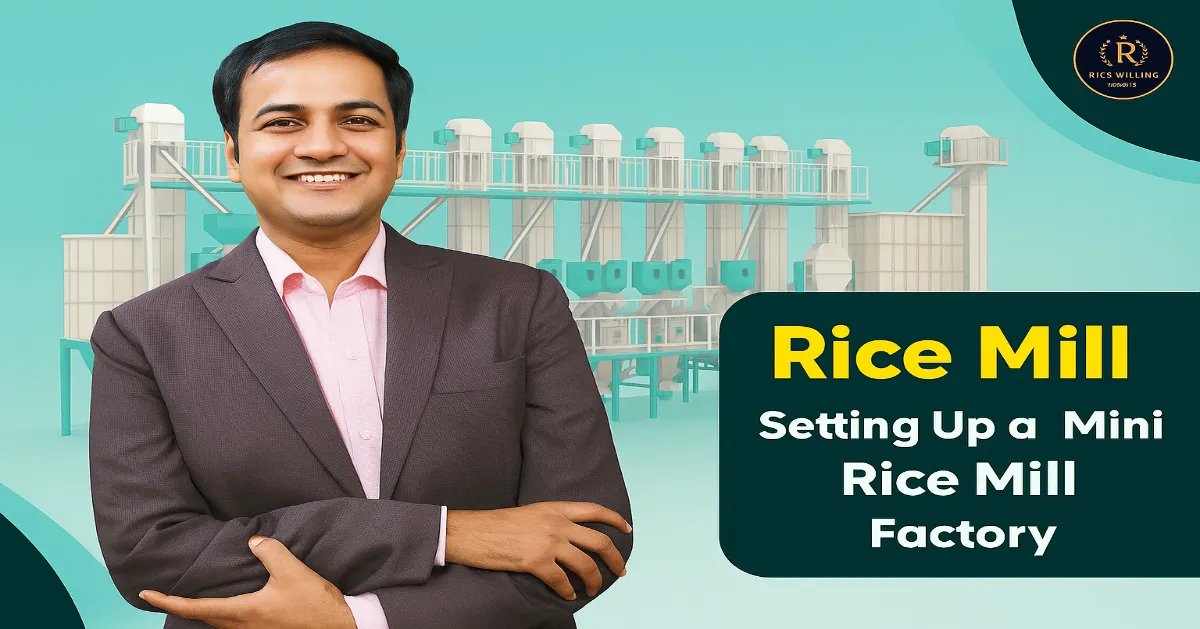
Rice Milling Factory Setup Guide 2025 for Beginners
Rice Milling Factory Setup Guide: Starting a rice milling factory is one of the most profitable agribusiness ventures in India and other rice-producing countries. As the demand for quality rice keeps growing, more entrepreneurs are exploring this industry. A well-planned rice mill layout plant with the right small rice mill building design not only increases efficiency but also helps reduce costs. By starting a mini rice mill project, you can achieve good profits with a reasonable investment.
In this guide, we will explain everything about rice mill layout, factory design, setup cost, and overall profitability in a simple and practical way.
Why Invest in a Mini Rice Mill Factory?
Opening a mini rice mill is a good idea. Demand of rice is going high every year. People in India eat rice daily, also many countries buy rice from India. So business scope is always there. If you plan well, you can earn good money from this work. Even small rice mills are enough to start with low budget.
- High Demand: Rice is daily food in India. People never stop eating rice.
- Profit: A simple rice mill can give steady income. Not too big, but regular.
- Government Help: Some subsidy and schemes are there which reduce cost.
- Low Cost Setup: Mini rice mills need less space, less workers, less machine cost. So it is easier to start.
Cost of Setting Up (1 tph) Mini Rice Mill Factory
Understanding the cost is crucial for planning. Here’s a breakdown of estimated expenses:
| Component | Estimated Cost (INR) |
|---|---|
| Land & Building | 5 – 15 lakh |
| Machinery & Equipment | 10 – 25 lakh |
| Installation & Setup | 3 – 7 lakh |
| Power & Utilities | 2 – 5 lakh |
| Licensing & Permits | 1 – 3 lakh |
| Raw Materials | 5 – 10 lakh |
| Miscellaneous Expenses | 3 – 6 lakh |
| Total Investment | 30 – 70 lakh |
Factors Affecting Cost:
- Location of the factory
- Type and quality of machines
- Labor and operational costs
Design and Layout of a Rice Mill Factory
A well-planned factory layout improves efficiency and reduces waste. Below is a recommended layout for a mini rice mill:
- Raw Material Storage: Proper storage facility to keep paddy dry.
- Pre-Cleaning Section: Removes impurities like stones, dust, and husks.
- De-Husking & Polishing Unit: Converts paddy into polished rice.
- Sorting & Grading: Ensures uniform rice size and quality.
- Packaging & Storage: Final processing before distribution.
- Power Supply & Control Room: Ensures smooth operation of machinery.
Example Layout
| Section | Purpose |
|---|---|
| Raw Storage | Keep paddy dry and safe |
| Cleaning Unit | Removes impurities |
| Milling Unit | Processes rice |
| Sorting & Grading | Quality check |
| Packaging | Ready for market |
Key Considerations for a Successful Rice Mill Factory
Choosing the Right Location
Selecting the right location impacts efficiency and profitability. A good rice mill should be:
- Close to paddy-producing regions
- Easily accessible by roads and transportation networks
- Near market hubs to reduce logistics costs
Selecting High-Quality Machinery
Investing in modern, automated machines increases production efficiency.
- Energy-efficient machines: Reduce power consumption.
- Automated systems: Ensure quality control and faster processing.
Legal Requirements & Licenses
To legally operate a rice mill, obtain necessary licenses:
- FSSAI Registration (For food safety compliance)
- MSME Registration (For government benefits)
- GST & Pollution Control Certificates (For taxation and environmental regulations)
Marketing & Sales Strategies
- Sell rice to wholesalers, retailers, and online platforms
- Partner with restaurants, hotels, and export agencies
- Establish a strong brand with quality assurance
Profitability of a Mini Rice Mill Factory
Your rice mill’s profitability depends on production capacity, cost efficiency, and market rates.
| Parameter | Estimation |
|---|---|
| Daily Production Capacity | 1 – 3 tons |
| Selling Price of Processed Rice | 35 – 50 INR/kg |
| Monthly Revenue | 5 – 15 lakh |
| Monthly Expenses | 3 – 8 lakh |
| Net Profit | 2 – 7 lakh per month |
Note: Profitability depends on rice quality, market price, and operational efficiency.
Frequently Asked Questions
Q1: What is the minimum investment required for a mini rice mill?
Q2: Can I get a government subsidy for setting up a rice mill?
Q3: How long does it take to break even in a rice milling business?
Read More About