
Milling of Rice: Complete Guide, Steps & Modern Methods
Rice is one of the most eaten foods in the world, especially in Asian countries like India, China, Bangladesh, and Thailand. Every day, millions of tons of rice are consumed. But the rice we eat is not the same as the paddy harvested from the fields.
Paddy is the raw crop that cannot be eaten directly. It has husk, dust, and unwanted layers that must be removed before it becomes edible rice.
This is where the milling of rice comes in. It is a step-by-step process that changes raw paddy into clean, polished rice ready for cooking.
In this guide, we will cover:
- Milling of rice meaning and its importance
- Paddy growth and processing
- Traditional vs modern rice milling methods
- Step-by-step rice milling process
- Why rice milling is important in today’s world
By the end of this article, you will know how paddy from the fields is turned into the white, polished rice that we eat every day.
What is the Milling of Rice?
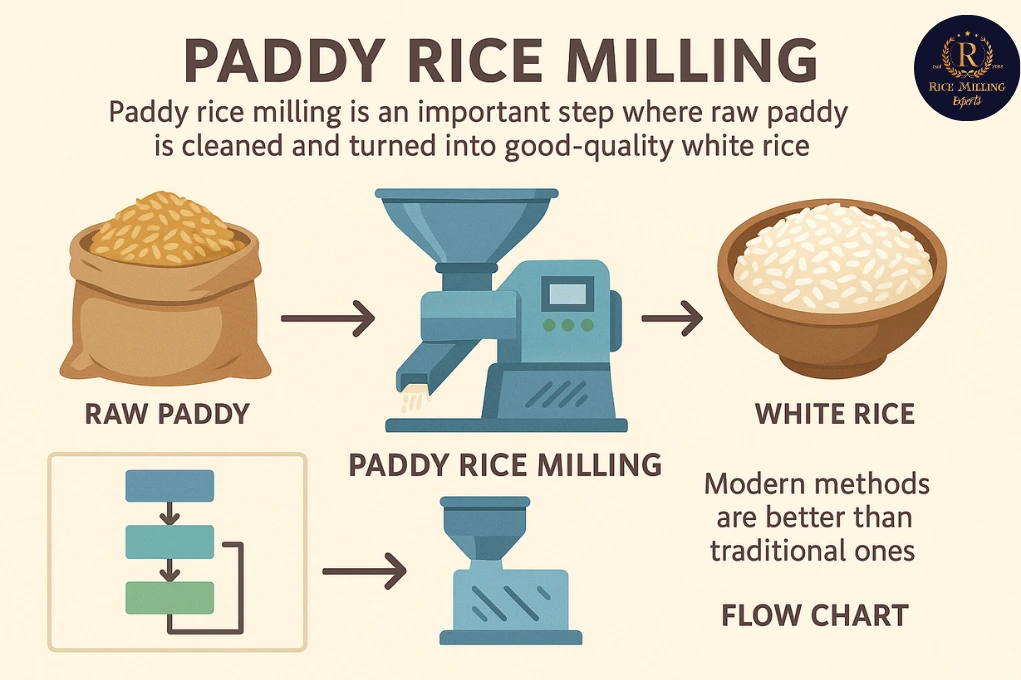
The milling of rice means removing the husk, bran, and impurities from harvested paddy to get edible rice. This process makes rice safe to eat, tasty, and easier to store.
- Raw paddy = Not edible
- After milling = White rice (ready for cooking)
Rice milling is not just about removing the outer layer. It also improves quality, reduces waste, and makes rice suitable for both home consumption and export.
पैडी राइस मिल एक प्रक्रिया है जिसमें कच्चे धान को शुद्ध और चमकदार सफेद चावल में बदल दिया जाता है। इस प्रक्रिया में धान का बाहरी आवरण (छिलका), भूसी और अन्य अशुद्धियाँ हटाई जाती हैं। आधुनिक मशीनों की मदद से यह काम अधिक कुशल और उच्च गुणवत्ता के साथ किया जाता है। चावल मिलिंग आवश्यक है ताकि चावल पकाने योग्य बने और लंबे समय तक सुरक्षित रहे।
Why is Rice Milling Important?
The milling of rice is very important because it makes the rice safe and ready to eat. In simple words, milling of rice meaning is the process of removing husk, bran, and impurities from harvested paddy. This process improves taste, texture, and cooking quality, while also increasing shelf life. Proper rice milling also reduces waste and makes rice more valuable in the market.
Benefits of Rice Milling
| Benefit | Description |
|---|---|
| Better Taste | Removing the bran layer gives rice a milder, nicer flavor. |
| Faster Cooking | Milled rice cooks quickly and evenly, making it convenient. |
| Longer Shelf Life | Removing the bran prevents spoilage and keeps rice fresh longer. |
| Higher Market Value | Well-milled rice looks clean and attractive, fetching a better price. |
| Reduced Waste | Modern milling minimizes broken grains, so more rice is usable. |
| Improved Hygiene | Removes dust, stones, and impurities, making rice safer to eat. |
Traditional vs. Modern Rice Milling
Traditional and modern rice milling methods serve the same purpose: producing edible rice from paddy rice mill. However, modern rice milling has introduced higher efficiency, better hygiene, and increased yield, making it a preferred choice in the industry.
| Feature | Traditional Milling | Modern Milling |
|---|---|---|
| Technology | Uses manual tools like pestles & mortars | Uses automated machines |
| Efficiency | Time-consuming, labor-intensive | Fast and requires less labor |
| Output Quality | More broken grains, inconsistent quality | High-quality, uniform grains |
| Production Rate | Low | High |
| Hygiene Standards | Less hygienic | More hygienic and safer |
| Waste Management | More grain loss | Less wastage, higher yield |
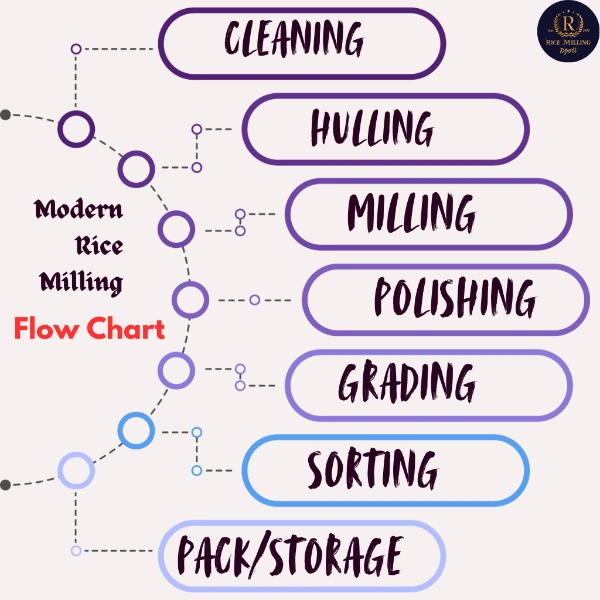
Modern Rice Milling Process Flow Chart
Growing of Paddy and Processing Before Milling
Before the milling process of rice starts, the journey begins in the fields where farmers grow paddy.
Steps in Growing Paddy:
- Land Preparation – Fields are ploughed and prepared for proper irrigation.
- Sowing and Transplanting – Paddy seeds are planted and later transplanted into fields.
- Water and Fertilizer Management – Rice requires flooded fields for growth.
- Harvesting – When grains mature, paddy is harvested carefully.
- Drying – The harvested paddy is dried to reduce moisture for safe storage.
Only after this does the milling of paddy start to transform it into edible rice.
Modern Rice Milling Process – Step by Step
The modern rice milling process uses advanced machines to get the maximum rice with minimum breakage. Here’s the process in simple steps:
| Step | Process | Purpose / Outcome |
|---|---|---|
| 1. Cleaning (Pre-Cleaning) | Removes straw, dust, stones, and small impurities | Protects machines and ensures clean rice |
| 2. De-Stoning | Separates stones and heavy impurities using gravity machines | Prevents damage and improves rice quality |
| 3. Husking / Hulling | Removes husk (outer shell) from paddy | Produces brown rice |
| 4. Paddy Separation | Separates any unhusked paddy from brown rice | Ensures uniform milling in next step |
| 5. Whitening (Milling) | Removes bran layer from brown rice | Produces clean white rice |
| 6. Polishing | Adds shine to rice grains | Improves appearance and market value |
| 7. Grading & Sorting | Separates broken rice and sorts grains by size | Ensures uniform quality |
| 8. Packaging | Packs final rice in bags for supply | Ready for storage and sale |
Importance of Rice Milling Process
The rice mill process is important for several reasons:
- Removes impurities and harmful particles
- Improves cooking quality and taste
- Increases shelf life of rice
- Adds market and export value
- Reduces wastage and improves efficiency
Milling Process of Rice – Key Highlights
- The process of rice milling makes rice safe and edible.
- The modern rice milling process ensures maximum rice recovery.
- Machines like paddy cleaner, de-stoner, whitener, and polisher play a major role.
Machines Used in Rice Milling
Using the right machines significantly enhances rice milling efficiency, ensuring higher yields and superior quality. Modern rice mills are equipped with advanced machinery to perform specific tasks in the milling process.
| Machine | Function |
|---|---|
| Pre-Cleaners | Removes impurities like stones and dust |
| Dehuskers | Removes husk from paddy |
| Whiteners | Removes bran layers |
| Polishers | Enhances rice appearance and texture |
| Graders | Sorts rice based on size |
| Optical Sorters | Identifies and removes defective grains |
| Blending Machines | Mixes rice batches for uniform quality |
| Packaging Machines | Packs rice efficiently for sale |
Challenges in Rice Milling Industry
Although modern rice milling has revolutionized rice production, it still faces challenges. These issues need to be addressed for continued improvement in the industry.
| Challenge | Explanation |
|---|---|
| High Initial Investment | Advanced rice mills require a significant setup cost. |
| Machine Maintenance | Regular maintenance is needed for optimal efficiency. |
| Skilled Labor Requirement | Operators must be trained to use modern machinery. |
| Power Supply Issues | In rural areas, inconsistent electricity affects production. |
| Post-Milling Storage | Proper storage is needed to prevent rice spoilage. |
Connect With Rice Milling Experts Online
Stay updated with our latest projects, videos, and rice mill tips!
| Social Media Plateform | Accounts Name |
|---|---|
| Rice Milling Experts | |
| @ricemillingexperts | |
| YouTube | Rice Milling Experts |
| Rice Milling Expert |
Follow us for real project updates, client stories, and rice mill tips.
Frequently Asked Questions (FAQs)
Q1. What is the milling of rice process?
Q2. What is hulling in rice milling?
Q3. Is there a flow chart for the rice milling process?
Q4. Can I get rice milling process in PDF or PPT?
Q5. How is rice milling done in India?
Read More About
- Paddy Cleaner: Importance, Uses & Benefits
- Paddy Milling Plants: Enhancing Rice Processing Efficiency
- Rice Mill Factory: Setting Up a Mini Rice Mill Plant
- Single Pass Mini Rice Mill Plant: A Complete Guide
- Rice Mill Consultants in India
- Best Rice Milling Services in Punjab
- Best Rice Milling Services in Rajasthan
- Best Rice Milling Services in Himachal Pradesh