
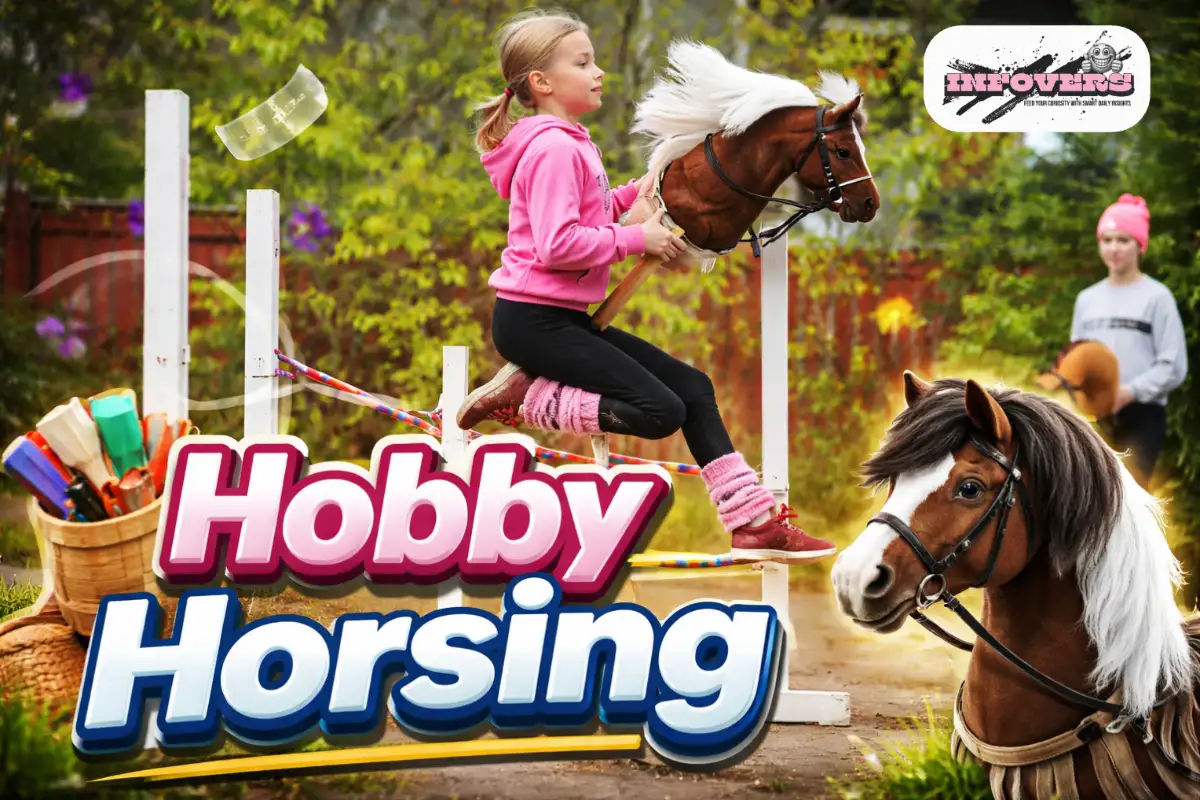
In the last few years, a unique and surprisingly competitive sport has started gaining attention worldwide, especially among teenagers and young athletes. The sport is called hobby horsing, and it involves performing riding movements, jumping competitions, and dressage routines using a hobby horse (also known as a stick horse). At first glance, it may look like a playful activity for children, but in reality, hobby horsing has grown into a serious sport with proper rules, championships, and dedicated training.
Many people are shocked when they first hear about hobby horsing, because it combines imagination with real physical exercise. Participants run, jump, and perform complex routines while holding a handmade hobby horse between their legs. The sport has become popular because it provides fitness, creativity, and fun all at the same time. In this detailed article, we will explain everything about hobby horsing, including its origin, how it works, disciplines, tournaments, advantages, equipment, and why it is becoming a worldwide trend.
What Is Hobby Horsing?
Hobby horsing is a sport that includes gymnastic and athletic movements, where participants use a hobby horse instead of a real horse. A hobby horse is a stick with a horse head attached to it, often designed in a very realistic style. Players hold the stick between their legs and move as if they are riding a real horse.
The goal is not just to pretend. Hobby horsers perform real sporting movements such as running, jumping, balancing, and controlling body posture. Many competitions are designed similarly to professional equestrian sports. Riders participate in show jumping events and dressage performances, where they must demonstrate discipline, rhythm, coordination, and athletic skills.
Hobby horsing is mostly popular among girls and young women aged 12 to 18, but in many countries, adults have also started joining. It is now recognized as a trendy and active sport, especially in Europe.
Where Did Hobby Horsing Originate?
The sport of hobby horsing originated in Finland, and it started becoming popular around 2008. At first, it was seen as a creative activity where young people built their own hobby horses and created imaginary riding worlds. Over time, this playful activity developed into an organized sport.
Finland is considered the birthplace of hobby horsing, and it remains one of the most important countries for this sport today. Finland hosts national hobby horsing championships every year, along with many regional tournaments.
The sport started spreading internationally after 2015, when people outside Finland began noticing it through social media and online videos.
How Hobby Horsing Became Famous Worldwide
One of the biggest reasons hobby horsing became famous worldwide is a documentary film released in 2017 called “Hobbyhorse Revolution” (original Finnish title: Keppihevosten vallankumous). The film showed the lives of young girls who were passionate about hobby horsing and treated it as a serious competitive sport.
This documentary helped the world understand that hobby horsing is not simply a children’s toy activity. It is a form of athletic expression, emotional creativity, and physical discipline. After the film gained popularity, the sport started spreading faster across Europe and beyond.
By 2016, hobby horsing had already reached Australia, and later official competitions also started appearing there. According to reports, the first Australian national championship took place in Queensland in 2024. In addition, hobby horsing is expected to grow even more in Europe, with international-level championships being planned.
Is Hobby Horsing Really a Sport?
Yes, hobby horsing is absolutely a sport. Even though it may look funny to people who do not understand it, hobby horsing requires strong physical fitness. Riders train for speed, stamina, jumping power, and balance. It also demands coordination, flexibility, and body control.
Hobby horsing competitions include real performance evaluation. Participants are judged on how well they complete routines, how high and cleanly they jump, and how accurately they perform dressage movements.
This is why many professional equestrian organizations in Finland have supported hobby horsing, as it encourages children to connect with horse culture even if they cannot afford real horses.
Why Hobby Horsing Is Becoming So Popular
There are many reasons why hobby horsing is growing quickly. Unlike many expensive sports, hobby horsing is affordable, creative, and accessible. People do not need a stable, real horse, or riding lessons, yet they can still enjoy the excitement of equestrian-style competition.
Another major reason is that hobby horsing gives young people a space to express themselves. Many hobby horsers design their own horses, create names and personalities for them, and even build their own obstacle courses at home. It becomes more than just a sport—it becomes a lifestyle hobby.
Social media also plays a big role. Videos of hobby horsing competitions often go viral, attracting new audiences and inspiring more participants to join.
How Does Hobby Horsing Work?
In hobby horsing, participants hold a hobby horse stick between their legs and simulate real riding movements. They move their body like a rider, control their posture, and guide their hobby horse as if it were real.
The courses are designed similarly to real horse competitions. Riders practice in arenas, fields, and even in riding clubs that allow hobby horse tournaments.
Participants often train like real athletes. They practice jumps repeatedly, work on speed, develop stamina, and improve their technique for dressage.
What makes hobby horsing different is that the rider becomes both the horse and the rider at the same time. This requires extra body control, because the rider must simulate horse movement while also maintaining rider posture.
Different Disciplines in Hobby Horsing
Just like real equestrian sports, hobby horsing includes multiple disciplines. Each discipline requires different skills and training.
Hobby Horse Dressage
Dressage is one of the most artistic and technical forms of hobby horsing. In dressage, riders perform a sequence of movements such as walking, trotting, and cantering. The goal is to show smoothness, rhythm, control, and elegance.
Participants must follow specific routines, often performed inside a dressage arena. Judges evaluate how accurately and beautifully the routine is performed.
Hobby Horse Show Jumping
Show jumping is the most exciting and physically demanding hobby horsing discipline. Riders jump over obstacles placed in a course. They must complete the track without knocking down bars and within a time limit.
This discipline requires strong leg power, speed, and balance. Many hobby horsers train like athletes to improve their jump height and endurance.
Hobby Horse Eventing
Eventing combines multiple disciplines, including jumping and endurance-style movement. It is like a complete test of the rider’s fitness, speed, and technical skill.
Western, Endurance, and Polo Styles
Some hobby horsers also practice creative styles such as western riding, endurance races, or even hobby horse polo. These styles are less common but are becoming popular as the sport grows.
Leisure Hobby Horsing
Many children enjoy hobby horsing simply as a fun activity without competition. They ride their hobby horses outdoors, create stable setups, and enjoy imaginative play.
Who Invented Hobby Horsing?
The invention of hobby horsing is credited to Finland. While stick horses have existed as toys for centuries, the modern version of hobby horsing as a competitive sport started in Finland around 2008.
Finnish hobby horsers were the first to introduce structured competitions and rules. Later, the sport spread internationally, and many countries began creating their own organizations and rulebooks.
For example, Germany has been developing official hobby horsing rules and working on training systems for judges and trainers. This shows how hobby horsing is becoming more professional and organized worldwide.
Who Can Participate in Hobby Horsing?
Hobby horsing is suitable for almost every age group. Children as young as three years old can enjoy basic hobby horsing for fun. However, competitive hobby horsing is most common among children aged 8 to 18.
In many countries, adults are also joining hobby horsing communities. Some adults participate because they love horses, while others join for fitness or as a fun creative hobby.
The sport is open to everyone, and it is mixed-gender, although it is mostly popular among girls.
Why Hobby Horsing Is Good for Children
One of the biggest advantages of hobby horsing is that it encourages physical activity. In today’s world, children spend too much time on mobile phones, video games, and social media. Hobby horsing gives them a fun reason to go outside and move.
From a health perspective, hobby horsing provides multiple physical benefits. It improves leg strength, jumping ability, and balance. It also builds stamina because riders run for long distances during training or competitions.
Hobby horsing also improves body awareness. Since riders must coordinate movements, control posture, and perform routines, they develop better control over their body.
Another important benefit is social growth. Hobby horsing is often practiced in groups, where children build friendships, teamwork, and confidence. It creates a supportive community environment, which is very helpful for young teenagers.
Hobby Horsing and Health Benefits
Hobby horsing has strong health benefits because it involves continuous movement. Riders often train in open spaces like parks, fields, and riding arenas. This helps children stay active and improves their fitness.
The sport develops:
- muscle strength
- endurance and stamina
- jumping and agility
- flexibility and coordination
- balance and posture control
It also supports mental health because it provides stress relief and creative expression. Many teenagers use hobby horsing as a way to escape anxiety, pressure, and school stress.
Where Are Hobby Horsing Tournaments Held?
Hobby horsing tournaments are usually organized by riding clubs, sports clubs, gymnastics groups, or private hobby horsing communities. Many real equestrian clubs allow hobby horse competitions because it introduces children to horse culture.
In Finland, hobby horsing is extremely organized, with national championships held annually. In other countries, tournaments are growing rapidly as more hobby horsing clubs form.
Some competitions are held in indoor sports halls, while others take place in outdoor arenas, just like real horse shows.
What Should You Wear for Hobby Horsing?
Proper clothing is important because hobby horsing involves running and jumping. Riders should wear comfortable sportswear that allows free movement.
Recommended clothing includes:
- athletic leggings or tracksuit
- breathable t-shirt or sports top
- riding gloves (optional)
- sports socks
- strong shoes like trainers or ankle boots
Some hobby horsers also wear equestrian-style outfits, which makes the sport feel more realistic and professional.
Safety is important, so wearing stable shoes is highly recommended to prevent injury while jumping.
What Kind of Hobby Horses Are Available?
Hobby horses come in many styles, colors, and breeds, similar to real horses. Many hobby horsers design their horses to look realistic with detailed markings, eyes, and manes.
Some hobby horses are handmade, while others are purchased from brands. Hobby horses can have different coat colors such as:
- black
- bay
- pinto
- dun
- brown
- grey
Many hobby horses also include braided manes and realistic facial designs, making them look like real animals.
How to Choose the Right Hobby Horse
Choosing a hobby horse depends on personal comfort and size. The hobby horse should match the rider’s height and strength. For younger children, lighter hobby horses are better.
The weight matters because hobby horsing involves holding the stick and running for long distances. A heavy hobby horse can cause tiredness quickly.
Most people choose based on color preference, but comfort should always come first.
Can You Make Your Own Hobby Horse?
Yes, many hobby horsers prefer to make their own hobby horses. In fact, self-made hobby horses are very common in Finland and are seen as part of the culture.
Making a hobby horse allows creativity. People choose the fabric, design the horse’s markings, create unique eyes, and style the mane.
However, sewing a hobby horse is not always easy, especially for beginners. That is why some people buy ready-made hobby horses or order custom-made ones, which can sometimes cost hundreds of euros.
Hobby Horsing Accessories: What Equipment Is Needed?
To participate seriously in hobby horsing, riders often use accessories similar to real horse equipment.
The basic accessories include:
Halter and Lead Rope
Used for handling the hobby horse, especially during practice or roleplay.
Bridle and Reins
Important for competitions, because riders hold reins and simulate real riding control.
Decorative Browbands
Many hobby horsers decorate their horses with stylish browbands, just like real horses.
Fly Bonnets and Martingales
Some riders use extra accessories to make the horse look more professional.
Transport Bag
Useful for carrying hobby horses safely to tournaments.
Riding Gloves and Socks
Recommended for riders to improve grip and comfort.
Tournament Ribbons
Used in competitions as prizes, similar to real equestrian tournaments.
Can You Style a Hobby Horse’s Mane?
Yes, styling the mane is one of the most fun parts of hobby horsing. Most hobby horses have long manes that can be braided.
Riders often practice:
- simple braids
- show plaits
- creative hairstyles
- decorative ribbons
Many hobby horsers treat grooming and styling like real horse care, which adds more realism and creativity to the sport.
How Hobby Horsing Is Viewed by Society
Hobby horsing sometimes receives mixed reactions. Some people see it as childish or strange, especially those who do not understand its athletic side. However, many organizations and professionals support it because it promotes movement and creativity.
Even in equestrian communities, some riders consider hobby horsing a fun way for children to connect with horse culture. It provides an alternative for those who cannot afford real horse riding.
Over time, hobby horsing is becoming more respected because competitions and championships prove that it requires real athletic effort.
Future of Hobby Horsing
The future of hobby horsing looks very strong. The sport is growing rapidly outside Finland, and more countries are developing official rules, training programs, and national championships.
International organizations like the IHHF (International Hobbyhorse Federation) are working to expand the sport further. With European championships planned in the coming years, hobby horsing is slowly becoming a recognized global competitive activity.
As social media continues to promote the sport, hobby horsing will likely become even more popular among young athletes worldwide.
FAQs
Ans. No. It is popular among children and teenagers, but adults also participate.
Ans. Yes, it involves running, jumping, balance, stamina, and competitions with judges.
Ans. Hobby horsing started in Finland around 2008.
Ans. Yes. Finland holds national championships, and many other countries now organize tournaments too.
Ans. Dressage, show jumping, eventing, western riding, endurance, polo, and leisure riding.